What Do Nurses Do?
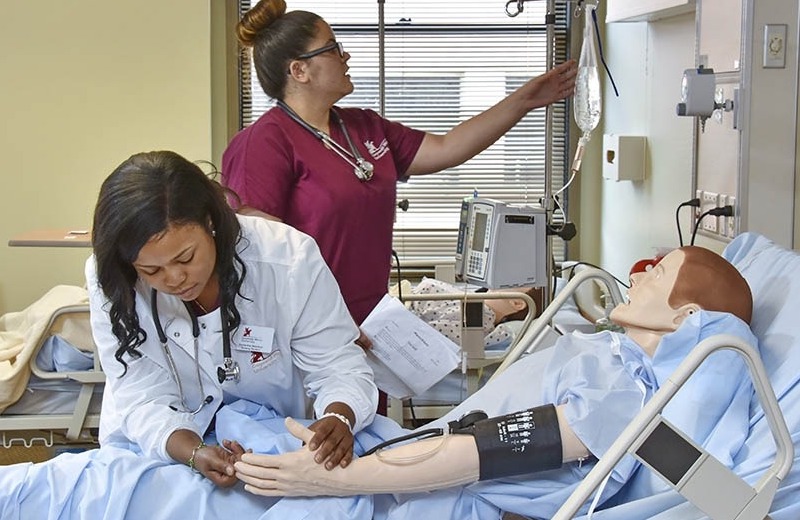
Nurses have many duties, including caring for patients, communicating with doctors, administering medicine and checking vital signs. Making up for the biggest healthcare job in the U.S., nurses play a vital role in medical facilities and enjoy a large number of job opportunities. The career growth for nursing is projected to increase by 6% through 2033 and provides a professionally and personally rewarding experience.
- What Is Nursing?
- What Is a Registered Nurse?
- General Nurse Duties
- Where Do Nurses Work?
- Types of Nurses (with requirements)
- What Are Nursing Salaries?
- How to Become a Nurse?
- Why Become a Nurse?
What Is Nursing?
Simply put, nurses are life-savers. There are more than 3 million registered nurses in the United States. In fact, nurses outnumber doctors 3:1 in the healthcare industry. While doctors often specialize in one area, nurses are able to coordinate the care for all aspects of a patient’s overall health. A patient experiencing chest pains, for example, might have a cardiologist, a nephrologist and an internal medicine specialist. Each of these doctors would diagnose, treat and prescribe medications solely for their area of expertise. The nurse, though, would be the care provider responsible for the patient’s full care, ensuring prescriptions don’t negatively interact with one another, and that a patient understands and is prepared for treatment. When diagnostic results come in, it’s the nurse who reads them first and, if necessary, immediately notifies the appropriate doctor.
Gone are the days when nurses act like the doctors’ handmaidens; today, they are equally responsible for the overall care of the patient.
What Is a Registered Nurse?
A registered nurse is a nurse who has obtained a nursing degree, has passed the NCLEX-RN exam and has fulfilled all other state licensing requirements. While an associates degree is the minimum education required to sit for the NCLEX-RN exam, a bachelor's degree or higher is becoming more commonly preferred among employers. For more information about becoming a registered nurse, you can read our registered nursing career guide.
General Nurse Duties
What do nurses do? They are continuously monitoring and evaluating patients, nurses must be smart, adaptive, educated and skilled in critical thinking. Nurses’ responsibilities include coordinating with multiple specialists to ensure that their patients are adequately on the road to recovery. Through the different types of care, a nurse’s capabilities extend past their stereotypical personas; while many envision nurses donned in medical scrubs and running through a hospital, a nurse may come in many forms.
Specifically, here are some of the things nurses do on a typical day:
- Conduct physical exams
- Take detailed health care histories
- Listen to patients and analyze their physical and emotional needs
- Provide counseling and health care education to patients
- Coordinate care with other health care providers and specialists
- Stay current with advances in health care options, medications, and treatment plans
- Draw blood, and perform other health-related testing
- Check a patient’s vital signs
Where Do Nurses Work?
Not all registered nurses work in hospitals. You can find a nurse in a wide variety of health care settings, including doctor’s offices, urgent care centers, pharmacies, schools, and many other locations. Nurses have the ability to use their skills to meet the needs of their patients, pretty much wherever they are located. For example, many nurses now assist the elderly or disabled in their homes. Some common places where nurses work include:
- Hospitals
- Clinics
- Offices
- Schools
- Pharmacies
- Ambulance/Helicopter
- Home health care settings
- Senior living communities
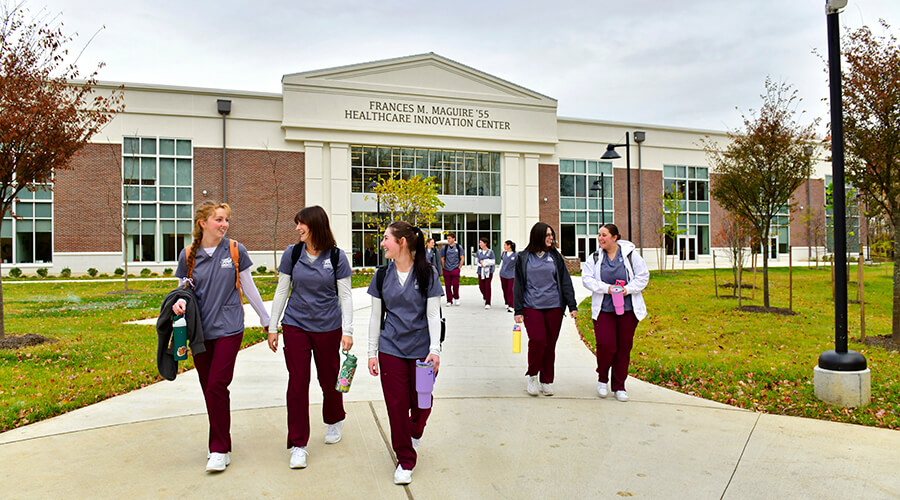
A New Home for GMercyU's Nursing Programs
State-of-the-art classrooms. Immersive simulation and skills labs. Spaces for collaboration between majors to learn how to treat the "whole" patient, a healthcare best-practice.
The new Frances M. Maguire '55 Healthcare Innovation Center (HIC) opened in August 2025 and is now the largest academic building on campus.
Explore the HIC
Types of Nurses (with Requirements)
Answering the question of what do nurses do can be challenging due to the fact that nurses are skilled in many fields and may choose to focus their trade specifically in certain types of care. Some specific nursing fields include geriatrics, critical care, pediatrics, treatment planning, and case management. From working face-to-face with patients to managing their paperwork, nurses play a huge role in our lives and the profession continues to be a prosperous career path for those considering taking on this role. Some different types of nurses and their education requirements include:
- Nurse Anesthetist. A nurse anesthetist assist mainly with medical procedures, specifically with anesthetic. To become a nurse anesthetist, you must hold bachelor's degree.
- Family Nurse Practitioner. A family nurse practitioner delivers family-focused care as a part of a healthcare team. Family nurse practitioners must hold a master's degree.
- NICU Nurse. A NICU nurse works with sick newborn babies. To become a NICU nurse, you must hold a bachelor's degree.
- Labor and Delivery Nurse. A labor and delivery nurse assists with the birth of newborns. Labor and delivery nurses must hold an associates degree.
- Travel Nurse. A travel nurse works short-term contracts in multiple locations in order to explore the world while working as a nurse. To become a travel nurse, you must hold an associates degree.
- Neonatal Nurse. A neonatal nurse works with sick babies. Neonatal nurses must hold a bachelor's degree.
- Pediatric Nurse. A pediatric nurse works with children in maintaining their normal care. To become a pediatric nurse, you must hold an associates degree.
- Ambulatory Nurse. An ambulator nurse works specifically on an ambulance for numerous emergencies. Ambulatory nurses must hold an associates degree.
- Clinical Nurse Specialist. A clinical nurse specialist works with patients in a variety of specialties in an advanced setting. To become a clinical nurse specialist, you must hold a master's degree.
- School Nurse. A school nurse provides medical support, education and treatment within an adolescent school facility. School nurses must hold an bachelor's degree.
- Nurse Educator. A nurse educator instructs and teacher aspiring nurse and health professions in their journey towards their career. To become a nurse educator, you must hold a master's degree.
If you are interested in learning about more nursing specialties and their education requirements, read our guide on types of nursing degrees.
What Are Nursing Salaries?
According to labor and statistics, the median salary for a Registered Nurse (RN) is $86,070 and can range as high as more than $120,000 per year. Different classifications of nurses will earn different salaries:
Median Annual Full-Time Nursing Salaries in the U.S.
Nurse Anesthetist: $212,650
Nurse Practitioner: $126,260
Registered Nurses: $86,070
Source: Bureau of Labor Statistics
How to Become a Nurse?
Since nursing is such a highly sought after profession that requires advanced training, education is key to your successful journey to becoming a nurse. Many employers now prefer that nurses have a Bachelor of Science in Nursing (BSN) over an Associates Degree in Nursing (ASN) or RN. Nurses with a Bachelor of Science in Nursing (BSN) develop the breadth of knowledge and clinical experience needed to succeed in today’s complex health care system.
- Choose a Nursing Program
- Earn a Nursing Degree
- Get Licensed
After you have successfully completed your courses, you can sit for required licensure exams.
If you’re looking to further advance your nursing career, you can go on to complete your Master of Science in Nursing degree (MSN).
GMercyU, Your Pathway to Success
Gwynedd Mercy University offers multiple CCNE-accredited programs for becoming a nurse.
For Traditional Undergraduate Students
- 4-Year BSN — For first-year and transfer students looking for a traditional, four-year college experience
- 3-Year BSN — For those who want a faster way to earn your BSN while still enjoying a traditional college experience
- Junior Year Summer Fast-Track for Transfer Students — For transfer students with 45 or more transferable credits; take 14 credits over the summer, start in the fall as a junior
For Career Changers (those with a bachelor's degree in another field)
- Accelerated BSN program — A full-time, 16-month program
- Weekend BSN program — A part-time program you can complete in less than three years
- Direct Entry Master of Science in Nursing degree — A full-time, 20-month, 72-credit program to help you transition to nursing with an advanced foundation of knowledge and skills
Start your journey today! Contact our Admissions office; we look forward to helping you launch your nursing career.
Online Nursing Prerequisite Courses
If you're changing careers to become a nurse and your bachelor’s program lacked a strong science component or if you graduated years ago, you may lack the necessary science background to succeed. You may also be concerned about finding the time to make up the necessary knowledge without disrupting your schedule. We have a solution: our convenient online nursing prerequisite courses.
Why Become a Nurse?
There is an old adage that you need a doctor to diagnose you, but a nurse to save your life. We can all recall a time when a nurse was needed most: from a normal check-up in a doctor’s office to an emergency situation that required a trip to the hospital.
Most people can think of a nurse who has played a significant role in their life at some time, whether it’s a family member, close friend, acquaintance, or the person you’ve been seeing at your doctor’s office for decades. You might even have a nurse in your phone book who you dial if WebMD doesn’t quite answer your medical questions.
To become a nurse is to become someone who improves and saves the lives of others. If you’re looking for a career where you can put your desire to help others to excellent use, becoming a nurse is an excellent career path for you.