Becoming a Radiation Therapist
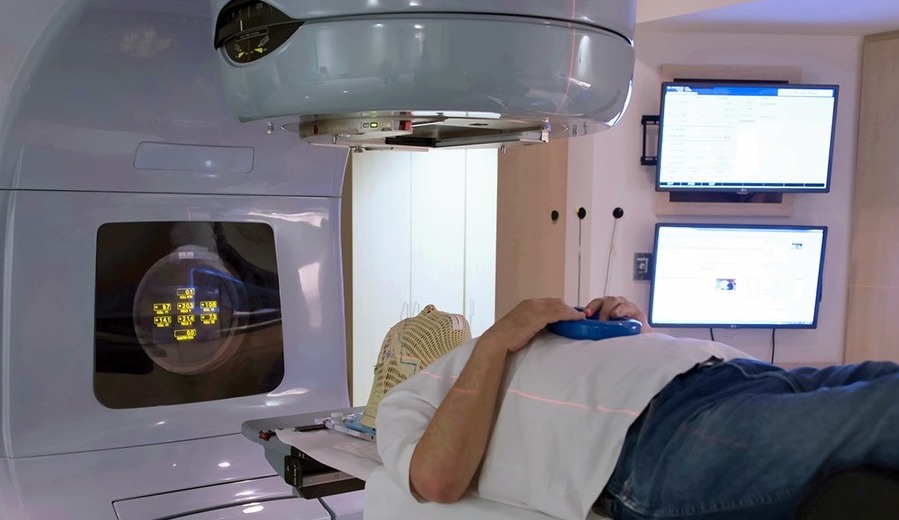 This guide will walk you through how to become a radiation therapist, including the education and skills you’ll need to successfully treat patients and help them recover from cancer and other diseases. Here, you’ll learn what to expect before beginning your radiation therapy program.
What is a Radiation Therapist?
Duties of a Radiation Therapist
How to Become a Radiation Therapist
Radiation Therapist Role and Education Requirements
Radiation Therapist Skills Needed
Radiation Therapist Salary
Your GMercyU Path to a Degree in Radiation Therapy
What is a Radiation Therapist?
A radiation therapist is a medical professional who administers radiation to patients who have cancer. Radiation therapists are part of a team of oncologists, medical physicists and oncology nurses who all work together to plan and administer treatments and monitor the condition of patients.
Duties of a Radiation Therapist
Radiation therapists are an essential part of a patient's healthcare team. Some of the duties and tasks of a radiation therapist include:
- Administer prescribed doses of radiation to specific body parts, using radiation therapy equipment according to the Radiation Oncologist's prescription
- Position patients for treatment and deliver high doses of ionizing radiation as prescribed
- Explain procedures clearly to patients
- Operate the machine to treat a patient with radiation
- Monitor the patient to check for unusual reactions to the treatment
- Keep detailed records of patient's treatment
How to Become a Radiation Therapist
Becoming a radiation therapist takes between two and four years to obtain your desired degree. An associate's degree takes two years to complete, and a Bachelor of Science in Radiation Therapy takes four years to complete. While you can become a radiation therapist with only an associate's degree, many employers prefer their therapists to have a bachelor's degree in order to be considered for the position.
- Decide on a radiation therapy program. Radiation therapist education requirements may vary by state or employer. For example, many hospitals now consider a bachelor’s degree to be the minimum standard of education, but other employers might accept an associate's degree.
Your degree program as a radiation therapy major will likely consist of classroom instruction and hands-on clinical experiences to prepare you for a career as a radiation therapist. Some degree programs offer hands-on training in the classroom using a VERT (Virtual Environment for Radiotherapy Training), which offers a safe, non-pressured environment for students to practice simulated radiation therapy techniques with 3D views and life-size visualizations. - Get registered. After completing your education, you’ll be eligible to sit for the registry exam, offered by the American Registry Radiologic Technologists (ARRT).
- Check state requirements. Depending on what state you plan to work in, you may also need to obtain a state license in order to become a radiation therapist. Pennsylvania is currently a state that does not require license exams, but New Jersey does.
Radiation Therapist Role and Education Requirements
Radiation therapists are part of a dedicated team of healthcare professionals who all work together to treat cancer and other diseases using radiation. Radiation therapists do more than just administer radiation; they also gather patient data and plan for the treatment.
To ensure cohesion with the team, students interested in a career in radiation therapy should attend a JCERT-accredited educational program, to ensure they understand ARRT’s ethical standards, protection protocols, and clinical concepts. As stated above, an associate's degree is the minimum degree you need to work in the field; a bachelor of science in radiation therapy is preferred. Upon completion of your degree program, you’ll sit for ARRT's registry exam and any required state licensure exams.
Radiation Therapist Skills Needed
In addition to the educational background, radiation therapists should be detail oriented. It is imperative that the radiation is delivered to the correct location each time. In addition, you’ll need to be conscientious of your safety and the patients’ safety, since radiation can be dangerous if the proper protocols are not followed. However, your educational program will teach you all the information you need to know to remain safe.
But there are more radiation therapy requirements than just education; radiation therapists should also be personable and able to make patients feel comfortable. Patients may be anxious or nervous about their treatment program, so it is crucial that radiation therapists be able to put them at ease and listen to their concerns.
Radiation Therapist Salary
Radiation therapists earn competitive salaries, making not just a highly rewarding career but a financially savvy one, as well.
The national median salary in 2024 for a radiation therapist was $101,990, the Bureau of Labor Statistics reports, with the top 10% earning more than $141,550.
In the Philadelphia area, radiation therapists earned an annual mean wage of $113,100 in 2024, per the BLS.
Your GMercyU Path to a Degree in Radiation Therapy
Gwynedd Mercy University offers a Bachelor of Science of Radiation Therapy program with a longstanding tradition of educating radiation therapists who treat patients with dignity and compassion. Students in the program will have at least three clinical placements, ensuring they are well prepared for a career in radiation therapy.
GMercyU also offers a Bachelor of Health Science in Radiation Therapy (Degree Completion), designed for radiographers who have graduated from a JRCERT program and are registered radiographers or registry eligible.
An Exciting New Home for GMercyU Radiation Therapy Students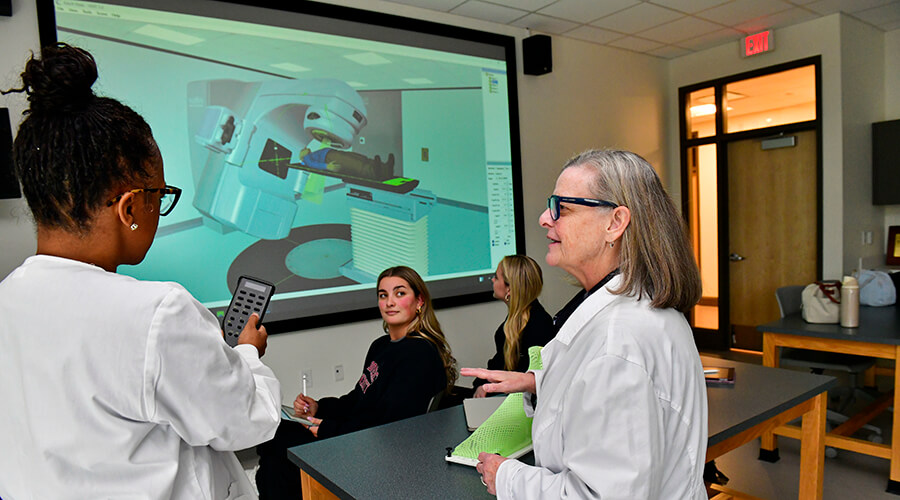
GMercyU's new Frances M. Maguire '55 Healthcare Innovation Center (HIC) opened in August 2025 and is now the largest academic building on campus. It features state-of-the-art classrooms, immersive simulation and skills labs, a convenient micro-market, and cozy spaces to study solo or with classmates. Here, you'll learn to address the healthcare needs of today and tomorrow, with the goal of improving access and equity for all.
The HIC is equipped with a state-of-the-art teaching tool, the VERT (Virtual Environment for Radiotherapy Training) for our Radiation Therapy majors. The VERT offers a safe, simulated radiotherapy treatment room complete with 3D views and life-size visualizations for you to practice simulated radiation therapy techniques.