Speech-Language Pathology Students Attend ASHA National Convention
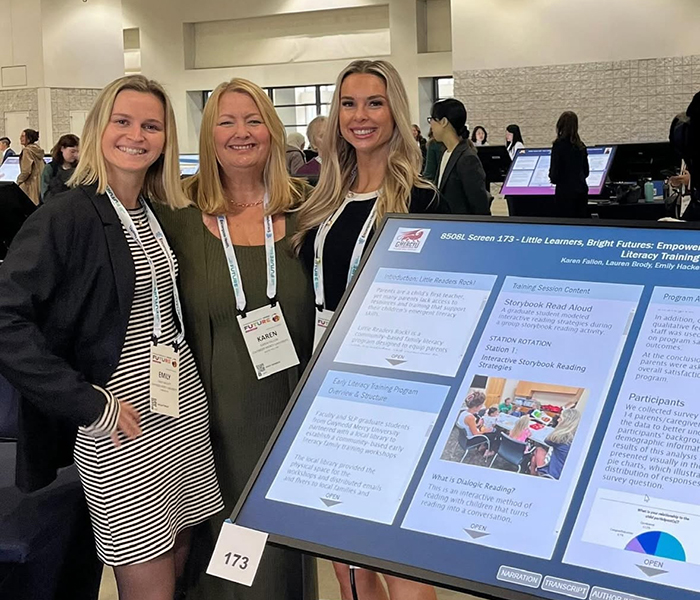 Last month, a group of second-year Master of Science in Speech-Language Pathology (MSSLP) students attended the 2025 American Speech-Language-Hearing Association (ASHA) Convention in Washington, DC with faculty.
The convention is described as the most comprehensive education event in the world for speech, language, and hearing professionals. It shares the latest research in the field, clinical skills and techniques, and new products and resources. It also allows attendees networking opportunities.
At the convention, GMercyU students participated in multiple presentations alongside faculty. Students can use the presentations for their MSSLP capstone project, a summative assessment project required for graduation.
According to students Quinn Shiffler and Emily Hackett, presenting at the convention was a terrific opportunity. “We are looking forward to applying what we learned and continuing to grow in our shared mission to improve lives by supporting communication and literacy for everyone,” they said.
"Participating in research projects that culminated in national conference presentations was a transformative learning experience for our graduate students,” said Karen A. Fallon, PhD, CCC-SLP, a Professor and the Program Director of GMercyU’s Speech-Language Pathology Department.
"The conference offered an invaluable opportunity to build confidence and skills as students shared project outcomes, networked with peers, and received feedback from leaders in the field. We are so proud of the SLP graduate students who represented Gwynedd Mercy University with exceptional distinction!"
GMercyU MSSLP Presentations included:
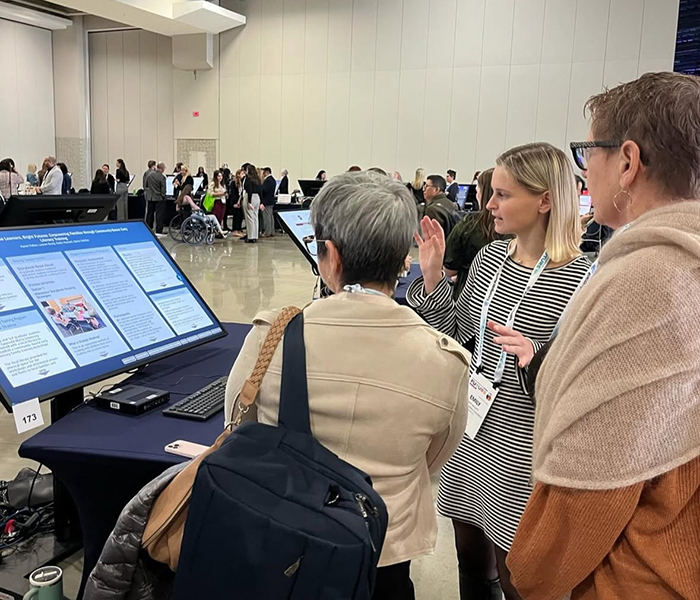
Little Learners, Bright Futures: Empowering Families Through Community-Based Early Literacy Training
Presenters: Dr. Karen Fallon and students Lauren Brody, Emily Hackett, and Quinn Shiffler
Session Description: Parents are a child’s first teacher, yet many parents lack access to resources and training that support their children’s emergent literacy skills. This poster focuses on a community-based family literacy program designed to equip parents with knowledge and resources to foster language and literacy at home. This poster will describe a series of interactive, evidence-based early literacy family training sessions held in community libraries. The poster will discuss key components of the training program, evidence-based emergent literacy strategies, program outcomes, and future possibilities for increasing family literacy engagement through community-based initiatives.
Envisioning the Future of Communication: Shifting to Neurodiversity-Affirming Practices for Autistic Individuals
Presenters: Dr. Yvonne D’Uva Howard, Dr. Jennifer (McIlvaine) O'Donnell, and student Kaci Murray
Session Description: This poster highlights a neurodiversity-affirming framework for supporting authentic communication in autistic individuals by integrating speech-based strategies, augmentative and alternative communication (AAC), and individualized supports. Using a strengths-based approach, we validate echolalia, scripting, and AAC as meaningful communication forms rather than deficits. Case examples illustrate evidence-based techniques to promote autonomy, self-expression, and inclusive communication
Engaging Young Learners with DLD: Comparing Traditional and Immersive Approaches to Vocabulary Instruction
Presenters: Dr. Yvonne D’Uva Howard and student Caitlyn Moreira
Session Description: Developmental Language Disorder (DLD) affects approximately 7.4% of children, creating academic and social challenges. This study compared immersive virtual field trips (iVFTs) with traditional book-based instruction in teaching space-related vocabulary to 30 children with DLD (ages 6–8). Findings revealed that while both approaches improved vocabulary, the iVFT condition yielded greater gains and higher motivation, highlighting the promise of virtual reality for individualized, interactive instruction.